

By Deborah (Beihl) Swena ’15
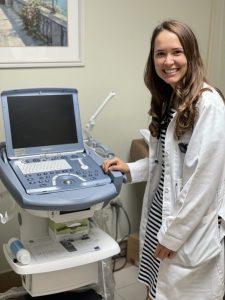
Editor’s note: Dr. Swena is an OB-GYN physician who has been caring for the women of Guam for the past two years. The following vignettes illustrate the gravity of the women’s health care situation on the island, which leaves many resigned to endure life-threatening conditions without access to care.
Amanda
Amanda had been bleeding for years. She had bled so much she lost her job because she was constantly in a pool of blood. Though she wore diapers, she still had to place towels in her car to avoid flooding the seat of her vehicle. When she came to my office for the first time, in need of a blood transfusion, I asked her why she hadn’t come to the clinic sooner. She told me she had talked to her friends and they all had bleeding like that too. She thought it was normal to have exceedingly heavy periods like this. While for many women medication and healthy lifestyles can help their bleeding, women with large fibroids or uterine cancer need more—and both problems are exceptionally common in Guam. There is a lack of OB-GYN physicians on the island and an urgent need for more trained gynecologists to treat the numerous women with dysfunctional uterine bleeding, many of whom need hysterectomies. It is common for women here to lose track of how many blood transfusions they have received in the emergency room, and also remarkably common for women to use adult diapers for heavy bleeding. For Amanda, she had large fibroids and medication was not enough to control her bleeding. She was done having children, and I offered her a minimally invasive hysterectomy. After surgery, she was thrilled to never go through a period again. Sadly, many of her friends are still suffering. This story is common in Guam. In some cases, the women are so anemic they develop myocardial ischemia and infarct—a horrific complication of vaginal bleeding that could be avoided with proper medical care.
Julie
One day, Julie passed out from excessive vaginal bleeding and fell through a glass door, suffering a deep laceration. Every medication to treat her abnormal bleeding had failed, and, until the day of her syncopal wake-up call, she had refused a hysterectomy. In the hospital I gave her a blood transfusion and the highest dose of every medication available to reduce her bleeding. However, her vaginal hemorrhage was faster than the blood transfusions. She was hemodynamically unstable; if she did not get an emergency hysterectomy, she was going to die. In the face of death, she was willing to have surgery. I praise God that we were able to get her uterine arteries clamped quickly, and she had a successful vaginal hysterectomy. She went on to do well post-op and was beyond grateful that her life was spared.
Martha
Martha was in the hospital again for a blood transfusion. She had called every OB-GYN practice in town, only to find nobody was taking new patients. I became aware of Martha’s situation through a personal plea for help from her friend. I squeezed her into my schedule and found her bleeding was due to a uterine precursor to cancer that we treated before it turned into malignancy. Fortunately, thanks to the plea from her friend, she was able to receive care. My heart breaks for others like her who are still suffering. My clinic is overflowing, and there are simply not enough OB-GYN physicians to handle the population’s needs.
Changing the Story
Inspiring the next generation of OB-GYN physicians is one way to relieve the lack of women’s health care, not just in Guam, but in mission settings around the world. Starting March 2022, God willing, senior OB-GYN residents from Loma Linda University will begin rotating here at Guam Seventh-day Adventist Clinic as an elective international rotation. Previously, these residents would rotate to a mission hospital in Africa. However, to my knowledge, starting March 2022, there will not be a permanent OB-GYN physician working as a mission doctor in any of the Seventh-day Adventist mission hospitals in Africa. I am excited about the opportunity to not only provide the residents with great surgical cases and interesting pathology but also to inspire them to serve in Guam and around the world as there is such great need for women’s health care. This goes beyond providing medical and surgical services, but also meeting the emotional and spiritual needs of patients. Many patients are afraid of surgery, as Amanda and Julie were, and prayer can bring comfort and strength to them in times of crisis. Amanda was so anxious she was about to cancel her hysterectomy when she had an idea to start singing Christian songs in the pre-op holding area. It empowered her to get the surgery she knew she needed. This is what whole person care is about.
I will always remember and be grateful for Elaine A. Hart ’00. Her prayers, mentorship, and encouragement came at a critical time in my journey to becoming an OB-GYN physician. Perhaps you can offer similar guidance to young physicians in your network.
What can you do to help? Are you an OB-GYN specialist or subspecialist? Do you know someone who is? Is God calling you to underserved areas? Do you know someone in training or considering medicine you can encourage to use their gifts to serve the underserved?
Mission work is fulfilling; your patients wouldn’t get care without you, and you give them an opportunity to know a loving God through your personal care for their needs. Wherever you may practice, take the time to minister to the spiritual needs of your patients and look for ways to mentor and encourage the next generation of health care professionals to respond to God’s call to serve overseas.
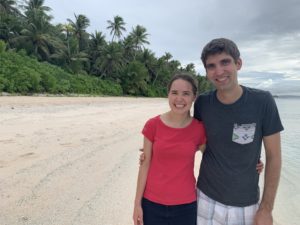 Dr. Deborah (Beihl) Swena has served at Guam SDA Clinic for the past two years, after completing her OB-GYN residency in Reading, Pennsylvania. When she isn’t seeing patients, she enjoys playing the piano and going on outdoor adventures with her husband, Mitch.
