
By Richard H. Hart ’70
Published in the Summer 2023 ALUMNI JOURNAL
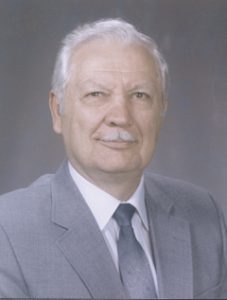
In 1962, Loma Linda University received an ultimatum from the Council on Medical Education to consolidate the campuses, either in Los Angeles or Loma Linda. With the Board of Trustees struggling to make a decision, Dr. Hinshaw was named Dean of the School of Medicine in 1962 and commissioned to “make it happen.” With resistance from the clinical faculty living in Los Angeles, he pushed ahead with a resolve and determination that was frustrating to many and inspiring to others. In 1967, that new facility, renamed the Loma Linda University Medical Center, was opened.
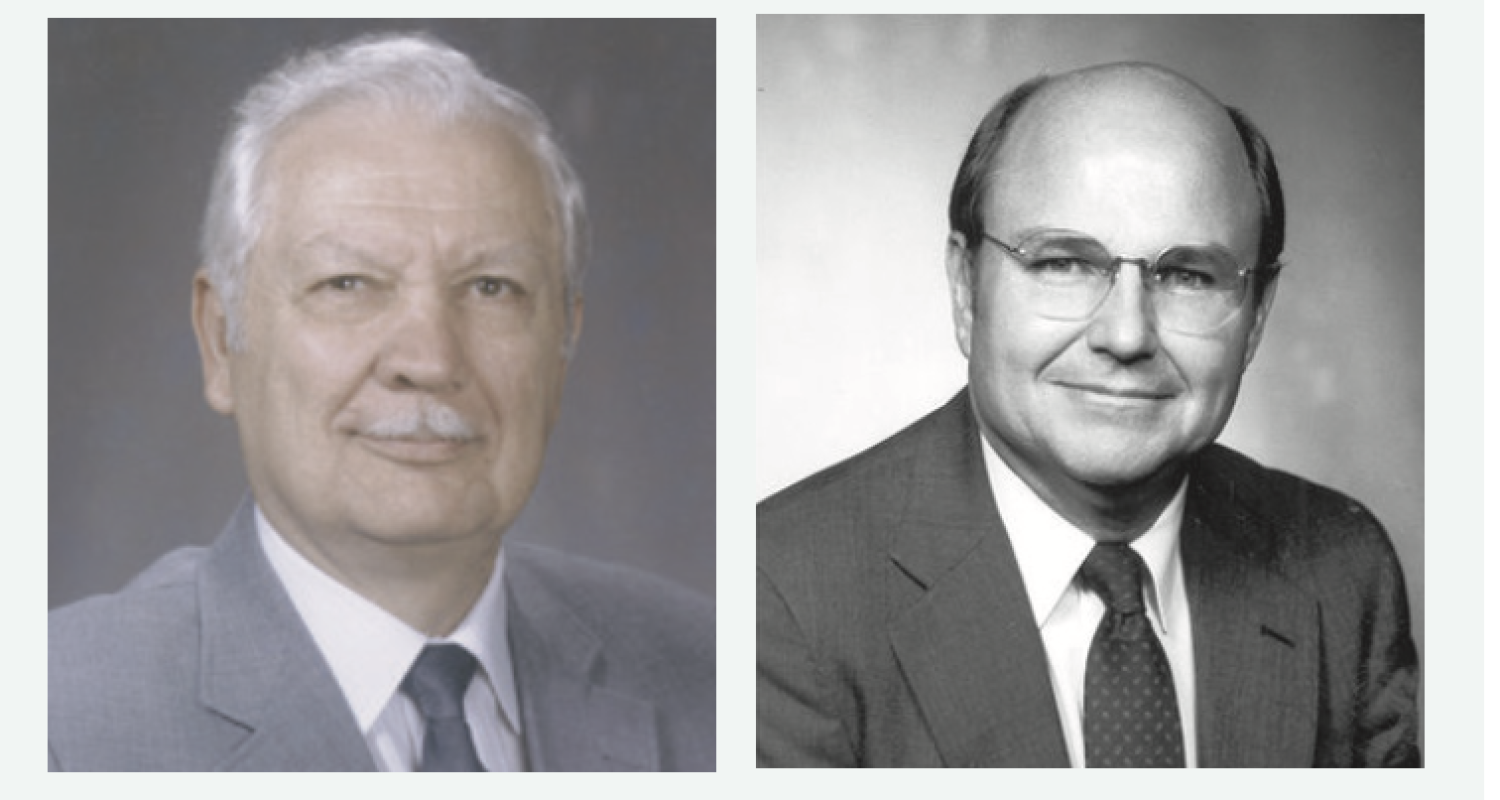
Woods, previously the dean of men at Walla Walla College, by 1977 had become the LLU vice president for academic administration. In 1984, he accepted the presidency after V. Norskov Olsen retired. In September 1984, just a few months into Norm’s presidency, the organization was thrust into the global spotlight following transplant of a baboon’s heart into “Baby Fae” by LEONARD L. BAILEY ’69. Norm used that event to bolster Loma Linda University’s public relations team and gain international fame for this small California university. That foundation served us well when in 1990 JAMES M. SLATER ’63 launched our proton treatment program, the first in the world to be established in a hospital setting. These two events repositioned Loma Linda University Health into a scientific institution to be reckoned with.
The six years of Norm’s leadership were also a time of considerable internal reorganization on the campus. Concern over the accreditation status of Loma Linda University and its La Sierra Campus led to extensive discussions on how to more effectively integrate the two institutions. The board decided it was best to study the feasibility of physically locating them together on the Loma Linda campus. The Board of Trustees gave Norm the task of “selling” this idea, which included identifying where to build the undergraduate campus at Loma Linda and how to convince the La Sierra faculty to move their programs here. This discussion started an epic discussion, similar to moving the Los Angeles campus to Loma Linda over two decades earlier. Moving an entire campus, with the associated travel implications for faculty and staff, was a huge consideration. Back and forth between the campuses, Norm traveled in his yellow VW Beetle, seeking consensus and an acceptable strategy. Unfortunately, the messenger was pilloried often more than the decision itself. After three years of debate, several board actions, and trying other administrative structures, it finally became clear that the political and physical costs were more than the institutions were willing to carry. At that time, Woods felt that the most peaceful course was for him to resign. The board realized if Woods could not bring them together, no one could. They ultimately decided to separate the two institutions entirely, ending the organizational linkage between them that had been in place for 23 years. Woods spent the next six months tirelessly working with many committees to implement this new decision and pull apart the structures that had been in place for one institution on two campuses for so many years.
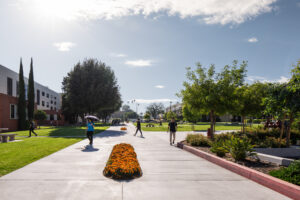
In retrospect, this was clearly the right decision, setting each institution free to pursue its own destiny. La Sierra College, now University, has become a thriving campus on its own. Loma Linda University could now identify itself as an Academic Health Science Center with all the benefits and challenges that has brought. In honor of Woods’ leadership during this difficult time and his dignified way of accepting these changes, we named the central path through campus the Woods Walkway several years ago. That path was once a street cutting the campus in half. It was during Woods’ leadership that the street was closed to traffic and became a pedestrian thoroughfare.
In 1986, Woods and Dr. Hinshaw began working together as leaders at LLU Health. Dr. Hinshaw had left the institution in 1975, then was invited back in 1986 by President Woods to serve as vice president for medical affairs and then as president of the Loma Linda Medical Center in 1988. It was during this time that another series of decisions were made that have equally impacted Loma Linda University Health (LLUH).
In 1990, B. LYN BEHRENS ’63-AFF took over from Woods as president at Loma Linda. Dr. Hinshaw, together with Dr. Behrens and JOHN W. MACE ’64, greatly expanded our children’s services in the Inland Empire with the growth of the department of pediatrics and construction of a children’s hospital. Dr. Hinshaw supported the dream of JAMES M. SLATER ’63 to develop the world’s first hospital-based proton treatment center on our campus. He saw the potential in purchasing the failed Charter Hospital near Redlands and converted it into our Behavioral Medicine Center, enabling psychiatry services to move from a 12-room ward in the hospital to its own 89-bed site. He started the conversion of the old Community Hospital into a major rehabilitation center we now call the East Campus.
It was during these critical 32 years, from 1962 to 1994, that Loma Linda University Health truly came of age as an academic health science center. We became a national leader in infant heart transplants, proton therapy, premier care of children, rehabilitation services, and psychiatric care. This enabled the rest of the campus to gain confidence and grow our research enterprise, including the Adventist Health Study. We then established the Schools of Public Health and Allied Health Professions and built a base for continued growth in both our student enrollment and clinical services.
To recognize Dr. Hinshaw’s impact, the administration recommended, and the Board of Trustees approved, naming the 1967 legacy cloverleaf hospital as the David B. Hinshaw, Sr. Towers. This is a fitting tribute to a man who guided the transition of LLUH from a small clinical school in a rural area (known as “the farm”) to an internationally valued icon. Dr. Hinshaw’s death in 2019 at the age of 95 and Woods’ death in 2022 at the age of 88 closed a chapter in our organization’s history. These recognitions honor their legacy here—the foundations they built on this campus for generations to come.
