My Grandpa was a master of reminding people, from his family to the patients he saw in clinic, that each of us owes our present experience and circumstances, for better or for worse, to a combination of the divine and to the choices made by those who came before us. He emphasized that every choice one makes, from the attitude you choose to carry out the door to the choice you make when presented with a deeply torturous professional ethical dilemma, will have real, tangible consequences that echo throughout time. As a 5-year-old, this pep talk put real pressure on me to have a positive attitude and to play nicely with the other kids on my first day of kindergarten.
Decades later, Grandpa’s talks about living a morally serious life that employed the golden rule so my actions would positively reverberate through time and space, hit me at the oddest of moments, like when I was in labor.
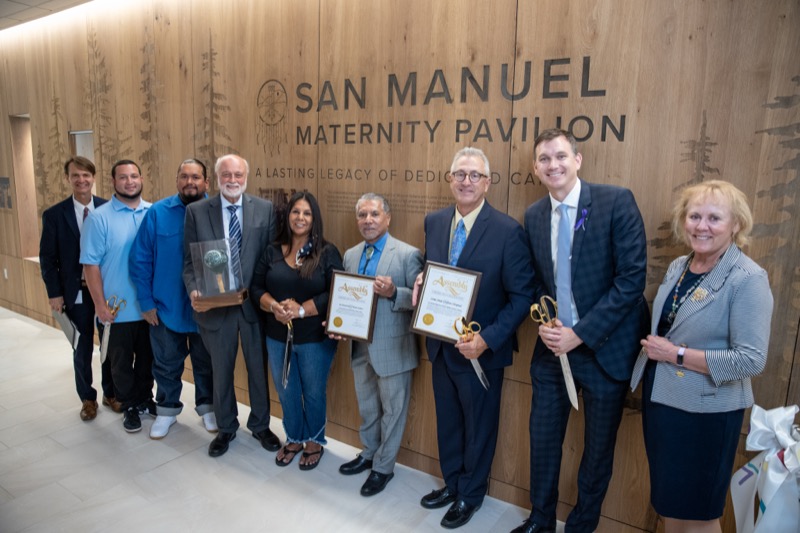
I was in the San Manuel Maternity Pavilion at Loma Linda University Medical Center, having the kind of contractions that had me alternating between pleasant, coherent speech and screaming in agony and nearly breaking the bones in my husband’s hand. Fortunately, my husband understands me well enough to know that the best way to distract me from pain is to get me talking about some obscure historical or esoteric area of interest. I am a bioethics professor after all, and even dilated to 7 cm, I can’t help but go into lecture mode.
Like a master in the art of contraction distraction, my husband commented on how nice the maternity ward was and asked me why it was called the San Manuel Maternity Pavilion. At this exact moment, one of my medical students walked in to check on me and reminded me exuberantly that we had discussed this very question in class a few months prior.
The short answer was that a mission of healing and the ethic of service created a relationship of trust between the physicians of Loma Linda University and the people of the San Manuel Nation, which led to the creation of the space we found ourselves in.

During the 1960s and 1970s, the Indian Health Service (IHS) oversaw the sterilization of at least 25 percent of the female Native American population between the ages of 15 and 44.1 For historical context, it is important to understand that the IHS of the 1960s was actually an institution over a century in the making. In 1849, the U.S. Congress moved the entity known as the Bureau of Indian Affairs (BIA) out from under the administrative direction of the War Department to the Department of the Interior, and by 1875, it had employed an army of physicians. By the early twentieth century, the BIA had created a separate health division with regional medical directors tasked with developing public health programs to combat infectious diseases, as well as additional civil engineering projects to improve the quality of drinking water, which continued until the 1950s. Because of the successes of these programs, Congress passed legislation in 1955 transferring administrative authority for all Native American health services from the Department of the Interior to the Public Health Service (PHS). The PHS then created a division named the Indian Health Service (HIS) in 1958.
Within less than a decade, the IHS began offering family planning services to the Native American population, but almost as soon as they did, the agency was beset with allegations of unauthorized sterilizations. Women of child-bearing age who came to hospitals at the referral of their regional IHS physician for surgeries such as appendectomies would leave having also undergone tubal ligations or full hysterectomies that they never agreed to. A slew of litigation resulted in multiple court rulings between 1965 and 1974 that ultimately saw courts across the country ruling that there must be informed voluntary consent and knowing assent given by the patient for the physician to perform a sterilization. Subsequent investigations in just four of the national regions found that the IHS had performed 3,406 sterilizations between 1973 and 1976. Still other studies found that IHS sterilized between 25 and 50 percent of Native American women of childbearing age between 1970 and 1976.2 In September of 1977, the National Council of Church’s Interreligious Foundation for Community Organization (IFCO) called together a summit in Washington, DC, to discuss strategies to “fight for survival” against sterilization abuses.
During these nearly two decades of trauma, Loma Linda University Medical Center and its missionary branches serving the Serrano peoples of San Bernardino County, such as the Yuhaaviatam of San Manuel Nation, stayed untouched by allegations or litigation. And to this day, they maintain a close relationship of mutual respect and support. But why? How did these entities manage to emerge unscathed by this scandal?
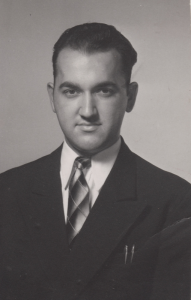
Grandpa, a.k.a. Ernest J. Braun ’49, graduated from Loma Linda and then served as faculty in the 1960s and 1970s. One of the illustrations that Grandpa shared to illustrate how the choices we make have a ripple throughout time draws directly from the history I just traced. He explained that during this period, there was a pervasive understanding that to tamp down on poverty and remedy what were perceived to be myriad social ills, many physicians were told by agency officials at the IHS that when performing any form of surgical procedure on a Native American woman the consent for the procedure covered any other “beneficial” treatment that could be performed simultaneously. For example, if a woman was going to have her gall bladder removed and consented to that procedure, then a tubal ligation or hysterectomy could be performed at the same time, and it was morally, ethically, and legally appropriate. According to my grandfather, physicians at Loma Linda during this era heard these sentiments about benevolently deceiving these women and refused to accept them. He said that Christian social ethics and the call that they all felt to service, what they had been taught in courses that studied A Ministry of Healing prevented them from considering for one second the notion that it was morally or ethically permissible to do this to these women and their community. And so they didn’t.
“And so they didn’t.” The way my grandfather said that sentence was so powerful. An act of inaction, the refusal to do wrong, the refusal to do anything to another you would not want done to yourself, so beautifully represented their commitment to their faith in such a poignant and monumental way.
Almost 50 years later, in 2019, the Yuhaaviatam of San Manuel Nation, represented by their Tribal Secretary Ken Ramirez, presented a gift of $25 million to Loma Linda University Health, the money earmarked to build a state-of-the-art maternity ward. Ramirez said of the moment, “San Manuel is grateful for the compassion shown to our elders by Loma Linda University Health many decades ago.”3 That money could have been earmarked for anything. It could have been used to fund a thousand other equally worthy projects. But its purpose was publicly stated as a symbolic gesture that commemorates a pledge to Christian ethics and moral medicine of the past.
That gift of $25 million was the second largest gift ever received by Loma Linda, and it made it possible for me and so many other women to give birth in an environment where we felt safe, and respected, and cared for. It can be easy to be blinded by the dizzying sum of money or ignore the name on the wall when you go to give birth. After all, the last thing on a woman’s mind as she goes into labor is signage.
But as I was talking to my husband and medical student, it struck me just how true my grandfather’s words were regarding how our present experience and circumstances are a combination of the divine and the choices that those who came before us made. These physicians were faced with a choice: a choice to follow the teachings of the healing ministry of Jesus Christ and do unto the peoples they served as they would have done to themselves, or follow a morally and ethically wrong professional mandate. They made their decision based on their faith, a faith guided by morals and ethics, and a faith that started for many with discussions with their pastors regarding the duty of a Christian as a disciple of Christ who spent more of his career healing than preaching.
There are more passages in the Bible describing Jesus’s compassion and service as a healer than Jesus the preacher. He witnessed to people by healing them, by helping them up, by treating them with the dignity that all humanity longs for.
The mission of Loma Linda University is to continue the healing and teaching ministry of Jesus Christ and in doing so instilled in a generation of physicians the commitment to the belief that all people deserve dignity and respect and the right to live. And so, when faced with a mandate that was anathema to the teachings of their faith, Loma Linda physicians held fast, did not comply, and allowed another generation to flourish. ν
References
Jane Lawrence, “The Indian Health Service and the Sterilization of Native American Women,” American Indian Quarterly 24, no. 3, 2000: 400–419, http://www.jstor.org.libezproxy2.syr.edu/stable/1185911.
San Manuel Band of Mission Indians, “San Manuel Band of Mission Indians Gives $25 Million to Loma Linda University Children’s Hospital,” San Manuel Band of Mission Indians. https://sanmanuel-nsn.gov/news/loma-linda-university-childrens-hospital-receives-25-million-gift-san-manuel-band-mission
“$25M Donation to Children’s Hospital | San Manuel Band of Mission Indians,” Yuhaaviatam of San Manuel Nation Tribal Government, 22 Feb. 2019, https://sanmanuel-nsn.gov/news/loma-linda-university-childrens-hospital-receives-25-million-gift-san-manuel-band-mission.

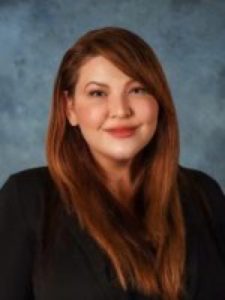 Whitny Braun de Lobatón, PhD, JD, MPH is an ethicist who serves as the director of the master’s in bioethics at LLU and teaches medical ethics for the School of Medicine.
 Ryan Marais ’21, MA, simultaneously researched and reviewed the historical content for this piece. Marais works at Loma Linda University Medical Center as a staff ethicist and outpatient internist.
