

Non-Traditional Pathways to Success: How Alumnus Howard Pope ’04 Turned Obstacles Into Opportunities
By Kim Westerman | September 2025
For many, the journey to higher education is a straight line. For Howard Pope, it was anything but. A 2004 UWSP Math graduate, Pope’s story is a testament to the value of persistence, creative thinking, and the power of giving back — not only financially, but through leadership and community service.
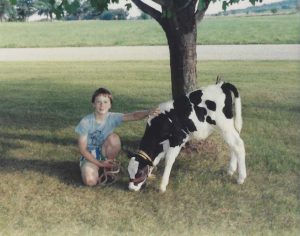
Raised on his family’s Wisconsin dairy farm, Pope understood responsibility at a young age. “I was paying income taxes at 10,” he recalls, “and at 12, I had to take over running the farm when my dad was injured.” Money was scarce — after expenses, the family of four lived on just $2,000 a year. Yet, rather than viewing this as a limitation, Pope used it as creative fuel to carve his adult path.
No one in Pope’s family had attended college, so when it came time for him to consider his options, he faced a dilemma. He had always been a saver, and the college financial aid systems penalized families with even modest savings; watching his sister get denied funding made the prospect of college seem distant. But the Wisconsin Army National Guard offered a potential solution. Between the GI Bill, state tuition reimbursements, scholarships like the Orville Rice Family Scholarship, and relentless work — sometimes juggling five jobs — Pope paid his way through college without a penny in student loans.
Pope knew that once he was situated in a job that he wanted to give back to the university he credits with helping him get where he is today: “UWSP didn’t just get me a job — it prepared me for life,” he says. This sense of gratitude led him to begin giving back to the university as soon as he was financially stable, around 2007. Since then, he has donated consistently for 18 consecutive years, becoming a proud member of UWSP’s Legacy Circle.
“It’s not about how much you give, it’s about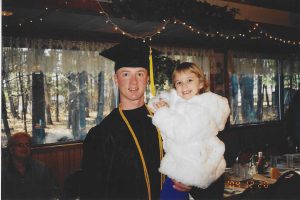 showing up every year,” Pope says. His contributions aren’t about recognition; they’re about ensuring that future students, especially those from working-class and rural backgrounds, have access to the same opportunities he did.
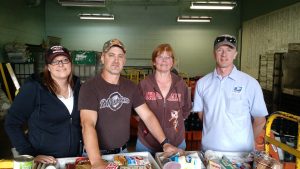
Pope’s commitment to service extends far beyond writing checks. He spent years organizing local and statewide food drives through the National Association of Letter Carriers, coordinated fundraising for the Muscular Dystrophy Association, and helped launch the Wisconsin Food Hub Cooperative, tripling its distribution in a single year. Throughout his professional life — from postal worker to logistics specialist to entrepreneur — he has prioritized service and sustainability — one of his current projects is restoring native wildflowers on his land and sharing the food he grows.
 Today, Pope balances philanthropic work with hands-on freelance projects like carpentry, landscaping, and homesteading. He’s slowed down from 100-hour workweeks to a more sustainable pace but remains deeply involved in his community.
Looking ahead, he dreams of establishing a perpetual scholarship, possibly directed at first- generation students from rural or farming backgrounds — those who, like him, dream big but face daunting odds. “I benefited from the generosity of others,” he says. “Now it’s my turn to pay it forward and leave the world a little better.”
Pope’s story reminds us that a legacy isn’t built overnight or through grand gestures. It’s built through small, consistent acts of generosity, year after year — a commitment to community, a belief in education, and a life dedicated to purpose.