

Black Culture Week
Friction between black and white students on the part of the administration, were among those demands. “Ultimately, we received funds for an annual Black Culture Week, for recruiting African American students and for BSC activities,” says Lee.
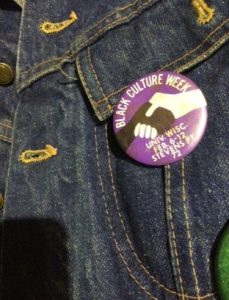
The first edition of Black Culture Week on campus occurred Feb. 6-12, 1972. Events included a kick-off dance, film presentations,
panel discussions, student “rap sessions” and an art show. “Roots” author Alex Haley also arrived on campus to speak on “The Saga of Black History.” Other notable Black Culture Week guest speakers that first decade of the BSU’s existence include civil rights icons Coretta Scott King and Dr. Ralph Abernathy, Olympic champion Maya Rudolph, “60 Minutes” correspondent Ed Bradley and actor LeVar Burton.
Also in 1972, a group of 10 BSC members helped expand upon the work of the
Upward Bound program that brought many of them to the WSU-SP campus in the first place. They volunteered to spend part of their winter break recruiting black high school students in their respective hometowns. “Most of the contacts were made in Milwaukee, Beloit and Chicago,” a story in The Pointer reported, “and according to Miss Lee, the project met with quite a bit of interest from prospective collegians.”
Equally high on the BSC agenda was outreach, which stressed being part of the
solution rather than merely calling for change. In 1976, BSC membership reached out to the Stevens Point Police Department and the mayor’s office to help ease lingering racial tensions in town by creating black awareness within the multiethnic community center be established in town.
Briefly called Brothers and Sisters in Unity for a time in the 1980s, the Black Student Coalition officially became the Black Student Union the following decade. Although the name had changed, the group’s mission had not—a mission that remains intact today.
“BSU has been able to provide the UWSP community, both on campus and off, with knowledge and resources that enable others to learn more about black culture and ways to
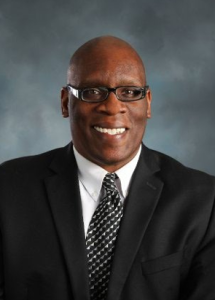
become a more culturally competent community,” says William Green ’96, UWSP’s Multicultural Resource Center coordinator and current BSU co-advisor. Green served as BSU president during his days as a student at Point. According to Green, current members also coordinate class presentations, organize and
participate in group volunteering opportunities
and offer peer-to-peer enrichment sessions on
campus. “Additionally, the themed dances put on by
BSU members, and the several events throughout the school year such as slam poetry, bake sales and karaoke nights, are very popular among UWSP students,” he says.
One of the most popular BSU activities is the annual Soul Food Dinner, which dates back to the group’s inception. Attendees from across campus and within the Stevens Point community are treated to traditional African-American fare such as fried catfish, jambalaya, black-eyed peas, collard greens and sweet potato pie, followed by an after-dinner program highlighting black culture. “It was our little way of doing something on this campus to make people aware of where we come from and what we celebrate,” said then-BSU co-president Ashley Ward in a 2008 interview.
COVID-19 has effectively put the kibosh on campus activities for the foreseeable future, but that didn’t stop the BSU from staging a version of its annual celebration in honor of Black History Month this year. On Wednesday, Feb. 24, the group sponsored a Zoom event featuring student presentations and a black-owned business panel Q&A. Participants even had the option of purchasing day-of prepackaged meals, available for pickup in the DUC, to help give the virtual event a traditional Soul Food Dinner vibe.
Beyond promoting a positive image of black culture and heritage, the BSU has logged an impressive track record at the personal level as well. “I know what the BSU did for me as a student leader,” says Green. “The club allowed me to network and acquire leadership skills. I established friendships during my time participating in the BSU that I maintain today.” And among the organization’s founding members—several of whom came to Point through Upward Bound and similar programs—one accomplishment could be said to rise above all others. “The greatest success,” Lee says, “was we graduated.” Now that’s something to celebrate.