

From UWSP to the Wilds of Alaska: John Wenger’s (’65 and MS ’80) Life of Adventure and Legacy of Giving
By Kim Westerman | August 2026
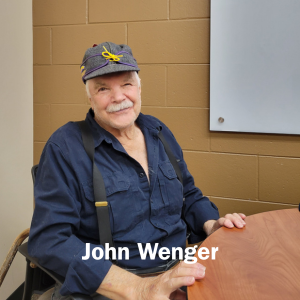 John Wenger never set out to become wealthy. He set out to watch birds. That simple fascination — born on a dairy farm in southwestern Wisconsin, where a three-year-old boy stood in a barn doorway mesmerized by swallows darting overhead — became the compass for a life of adventure. It carried him from the College of Natural Resources at the University of Wisconsin-Stevens Point to the battlefields of Vietnam, the wilderness of Alaska, the rainforests of Bolivia and, ultimately, back to Stevens Point with a gift that will help future students for generations to come.
When Wenger died in October 2025, he left his entire estate to UWSP’s College of Natural Resources (CNR), capping decades of philanthropy with one of the most significant gifts in the college’s history. His gift, in the amount of $2.2 million dollars, is the 13th largest in university history, and eighth largest ever given by an alumnus. The estate supports student scholarships, launches a major modernization initiative for the CNR building, and ensures that Wenger’s commitment to conservation education will continue long after his final migration.
For CNR Dean Brian Sloss,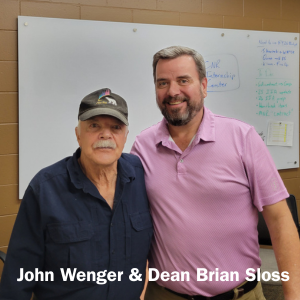 the gift represents far more than a financial contribution. “John lived simply,” Sloss said. “He gave generously, and he never forgot how much his time at UWSP meant to him. Every time I’d see him, he would talk about how much our college and university did for him and how grateful he was for it.”
Humble beginnings, extraordinary ambition
Wenger’s story began in rural Darlington, Wisconsin, where his family lived as sharecroppers before eventually purchasing a dairy farm. Money was scarce, but nature was abundant. “I’ve been birdwatching over 80 years,” Wenger recalled during an oral history interview conducted by Brian Stezenski-Williams, major gifts officer, in 2025. “Every bird that came in, every new bird, was entertainment as a kid.” When a high school teacher suggested he study conservation at Stevens Point — a pioneering program that would later become UW-Stevens Point’s renowned College of Natural Resources — Wenger found his calling.
Working as many as 40 hours a week while carrying a full academic load, Wenger washed cafeteria dishes, drove school buses and accepted odd jobs preparing museum specimens, all while studying biology and conservation. His parents could offer little financial help, leaving him to finance his education through loans and relentless work.
A life defined by adventure
After graduating in 1965, Wenger’s plans were interrupted by the Vietnam War. He joined the U.S. Navy, and later served with Underwater Demolition Teams, predecessors to the Navy SEALs. His experience of war 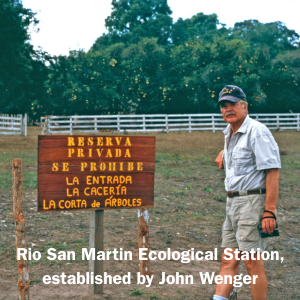 left lasting emotional scars.
“John’s time in Vietnam affected him beyond his tour of duty,” Sloss said. Rather than allowing that trauma to define him, Wenger found healing outdoors.
He returned to UWSP to earn a master’s degree in environmental education and interpretation, where faculty taught him not simply to identify nature, but to truly observe it — to smell flowers, read animal tracks, keep meticulous field journals and understand ecosystems through all five senses. Those lessons would become the foundation of his career.
After graduate school, Wenger headed north. Alaska became his home for decades; he worked for state and federal wildlife agencies studying salmon, birds and ecosystems before teaching natural history courses at the University of Alaska. Eventually, he built a successful guiding business, leading visitors through Denali National Park, Wrangell-St. Elias and other wilderness areas while sharing his encyclopedic knowledge of birds, flowers, mammals and tracking. He became known for helping visitors see details others overlooked, like explaining how melting snow around moose droppings could reveal compass directions.
“John lived a dream life for a CNR alumnus,” Sloss said. “Adventure tours, overcoming state and federal bureaucracies standing in the way of his goals, and working with people in nature — two things he showed a passion for throughout his life.”
Living simply to give generously
Despite building a successful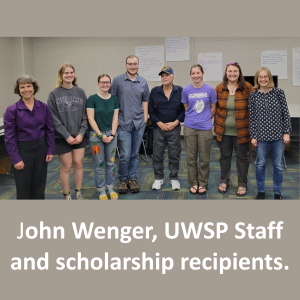 business and becoming a savvy investor, Wenger never adopted a lavish lifestyle. He drove an aging pickup truck topped with a weathered camper. He asked Sloss, “Why do I need all the new stuff when I have everything I could possibly use and need already?”
Influenced by Henry David Thoreau’s philosophy to “simplify,” Wenger invested carefully, saved diligently and devoted much of his wealth to conservation causes, including endangered species projects in Bolivia and scholarships at UWSP. On his annual visits to his alma mater, he’d always ask, “What do you need, Dean? What does the college need?” Sloss remembers.
For years, Wenger personally funded approximately $25,000 annually in student scholarships before deciding his legacy could accomplish even more. Wenger and Sloss spent years discussing how his estate could provide lasting impact. Together, they developed a vision.
Part of the $2.2 million dollar gift would permanently endow the scholarships Wenger had already been funding, ensuring they would continue indefinitely. Another portion would serve as the lead gift for a comprehensive modernization of the College of Natural Resources building, creating collaborative learning spaces and helping leverage significant state matching funds for future renovations.
“I’ll always remember our last visit,” Sloss said. “He looked at me and said, ‘Brian, I trust you. You’re going to do what’s right with this money for the college and for the long-term good of it.'”
A legacy that keeps growing
Even after retirement, Wenger’s annual migration continued.
Every autumn, he followed birds south through the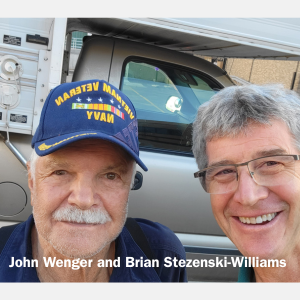 continent, stopping in Stevens Point before continuing on his journey. Those visits became cherished traditions for Sloss.
“I’ll miss my fall visits with my friend,” he said. “His adventures and stories were inspiring, a little scary at times, and always full of vigor and adventure that marks the lives and attitudes of so many of our alumni.”
Today, students receiving Wenger Scholarships may never have the chance to hear one of his stories firsthand. But they will continue benefiting from the opportunities his generosity created. The college has also committed to preserving his memory through annual scholarship celebrations featuring his story and recorded interviews.
As Sloss sees it, Wenger’s greatest contribution wasn’t simply the financial support he left behind. It was also the example he set. “He walked the talk,” Sloss said. “He lived by an ethic and had a focused, passionate life. And he showed what one person can do when they live with purpose.”
John Wenger spent a lifetime following birds across continents. And his last journey brought him home to the university that first taught him how to see the world, and to generations of students who will continue exploring it because he so generously gave back.