

A Lifelong Lesson in Courage and Connection
UWSP alumna Mary Cray (M.S., ’75) brings the spirit of Selma and the power of nature to generations of students.
By Kim Westerman
When Mary Cray talks about courage, she doesn’t speak in abstractions. The Riverside, Illinois, resident remembers vividly the day in 1965 when she boarded a plane bound for Alabama to march alongside Dr. Martin Luther King, Jr. in Selma, Alabama. Then a student at St. Xavier College in Chicago, Cray had volunteered through CALM — the Chicago Area Lay Movement — to support the growing civil rights effort in the South.
“We were taught how to be nonviolent and how best to protect ourselves if attacked,” she recalls. “If we couldn’t promise to be nonviolent in word or action, we were asked to leave or stay and make sandwiches for the marchers.” She spent three days in a Selma jail for marching to the mayor’s home after demonstrations were banned. “The sheriff said, ‘Girl, you must be crazy coming down here,’”she remembers. “I told him, ‘Take me to jail.’”
From Civil Rights to Environmental Education
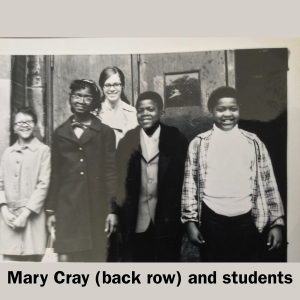 After several years teaching science and creative writing at Chicago’s William Penn Elementary School in North Lawndale, Cray began to notice how her students — many of them gang members — came alive when they were outdoors. She organized weekend camping trips to the Indiana Dunes and kite-flying outings at Chicago’s lakefront. “The effect of being outdoors on their minds was fantastic,” she says. “They paid much more attention — and they wanted to learn.”
In 1973, Cray took a sabbatical to deepen her understanding of the natural world. She chose the University of Wisconsin–Stevens Point for its nationally recognized program in natural resources. And she convinced both the education and natural resource department chairs to let her create her own degree plan, proposing to take all her coursework in natural resources but earn a degree in environmental science. “I wanted to bring environmental learning back to my students,” she says.
Her time at UWSP was transformative. She co-authored The Beginning of a Nature Center (1975) with faculty mentor Gabriel J. Cherem, a practical guide to creating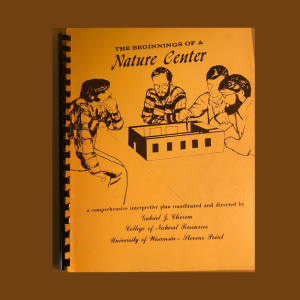 accessible outdoor learning spaces. The experience reinforced her belief that education and stewardship go hand in hand.
Teaching, Mentoring, and Protecting the Prairie
Cray returned to Chicago and secured a federal grant to take her students on weeklong outdoor-learning trips. She continued teaching for decades, and today, though retired, she remains active in education and conservation.
She serves on the board of Celestial Ministries, founded by one of her former students, Stanley Ratliff, who earned a degree in music while incarcerated and now mentors young musicians in Chicago. “I help tutor his students — sometimes focusing on the math of music or the science of sound,” Cray says.
She’s also on the board of directors of the Save the Prairie Society in Westchester, Illinois, which safeguards a 10,000-year-old remnant prairie from development. “We even bought up parcels of land and donated them to the Cook County Forest Preserve and the Illinois Department of Natural Resources,” she says. “Now no one can touch them.”
Through it all, Cray has remained grounded in a kind of hopeful pragmatism. As she once put it, “It’s got to be fun. I have to have fun. But I’m going to be there, too.”
Her quiet strength, tested in Selma and nurtured at UWSP, continues to shape the communities and students lucky enough to learn from her.