

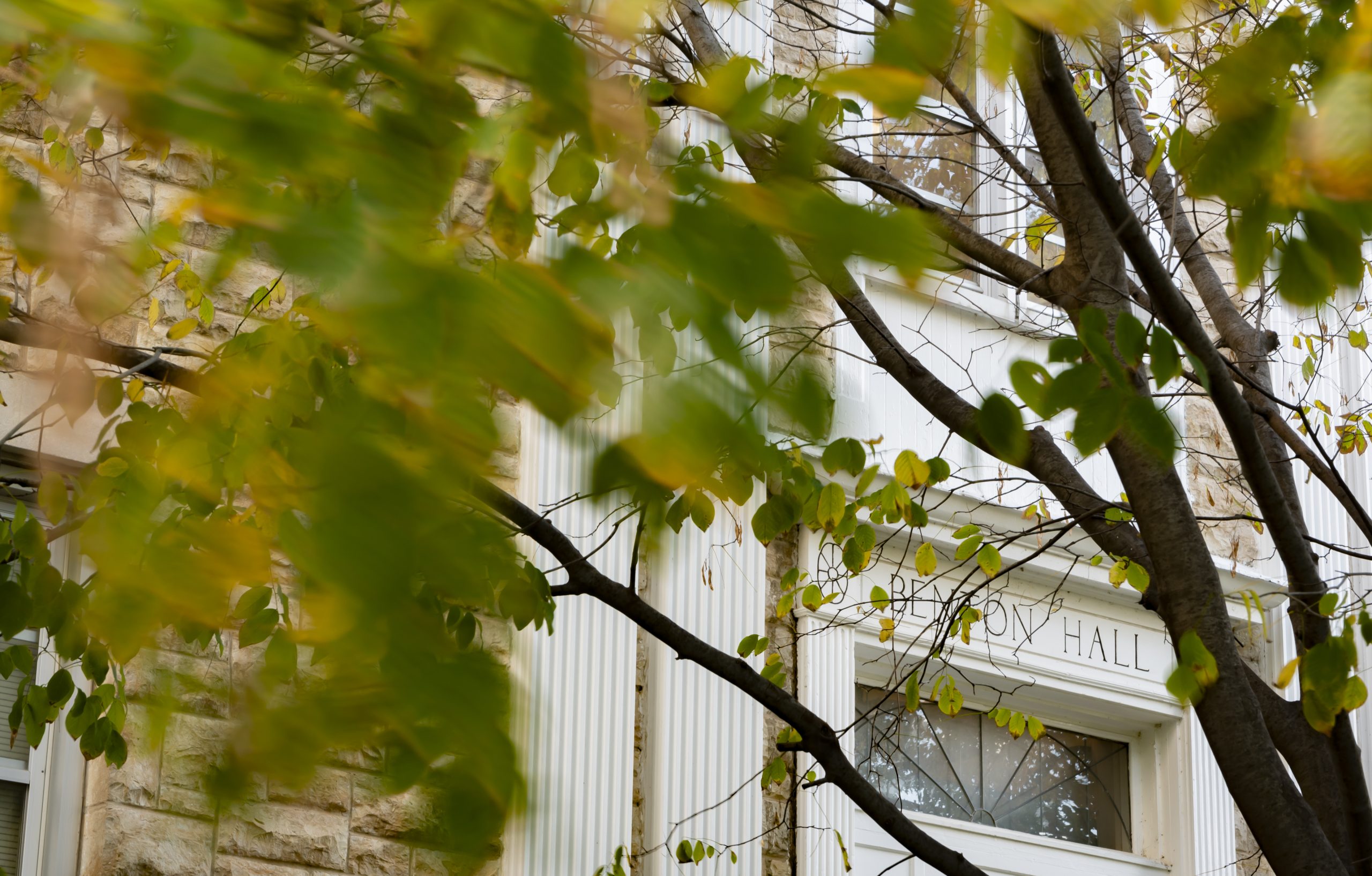
For more than a century, Benton Hall stood as a quiet witness to the evolution of Washburn University. Built in 1923 as a women’s dormitory, the stately stone building located in the center of campus transformed over the decades – from housing students to teaching future social workers, criminal justice professionals and others.
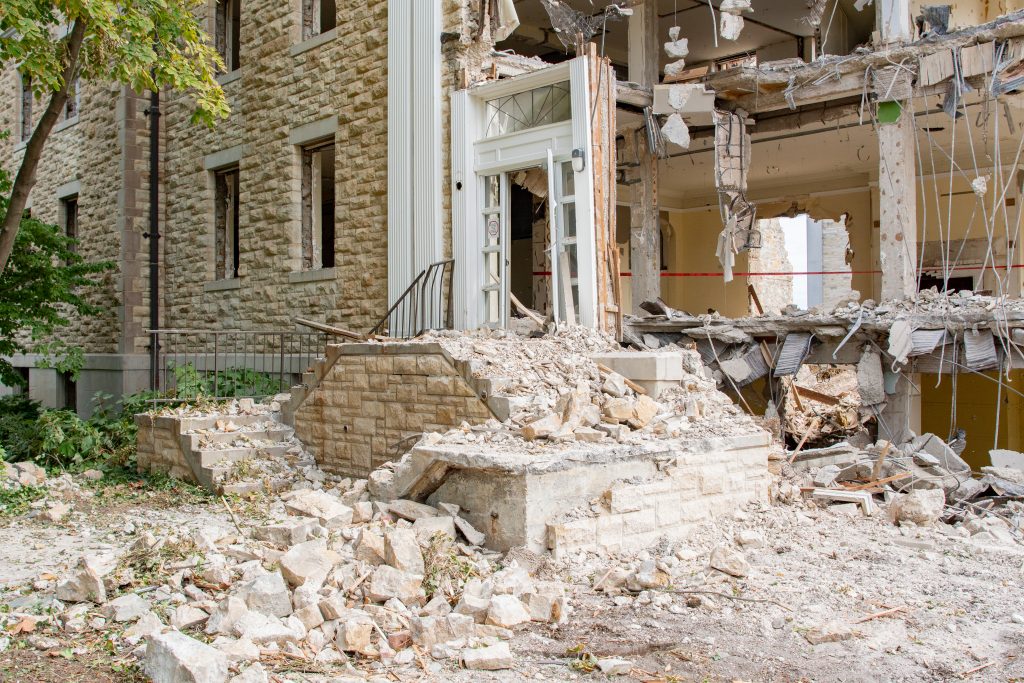
Yet, all good things eventually come to an end. Repairs and upgrades to the 100-year-old building were no longer practical from a cost perspective. With newer facilities able to efficiently take on the class load and office space, the hard choice was made to retire Benton Hall, and demolition began this summer. While the physical building no longer remains, its legacy endures in the deeply personal memories of alumni who called it home, classroom or sanctuary.
Dorm Life and Lasting Bonds
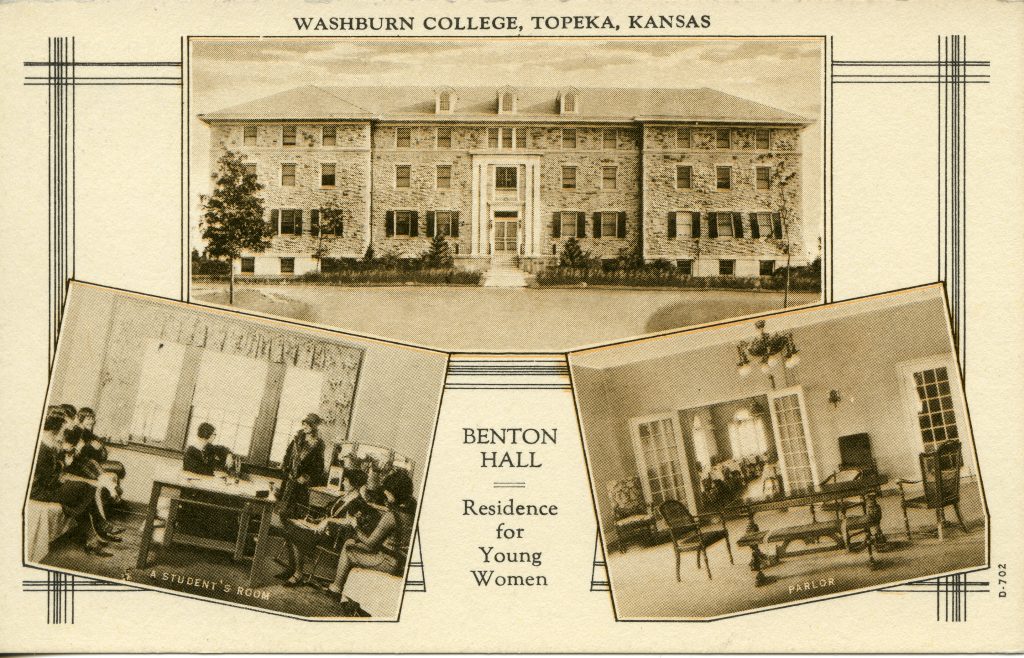
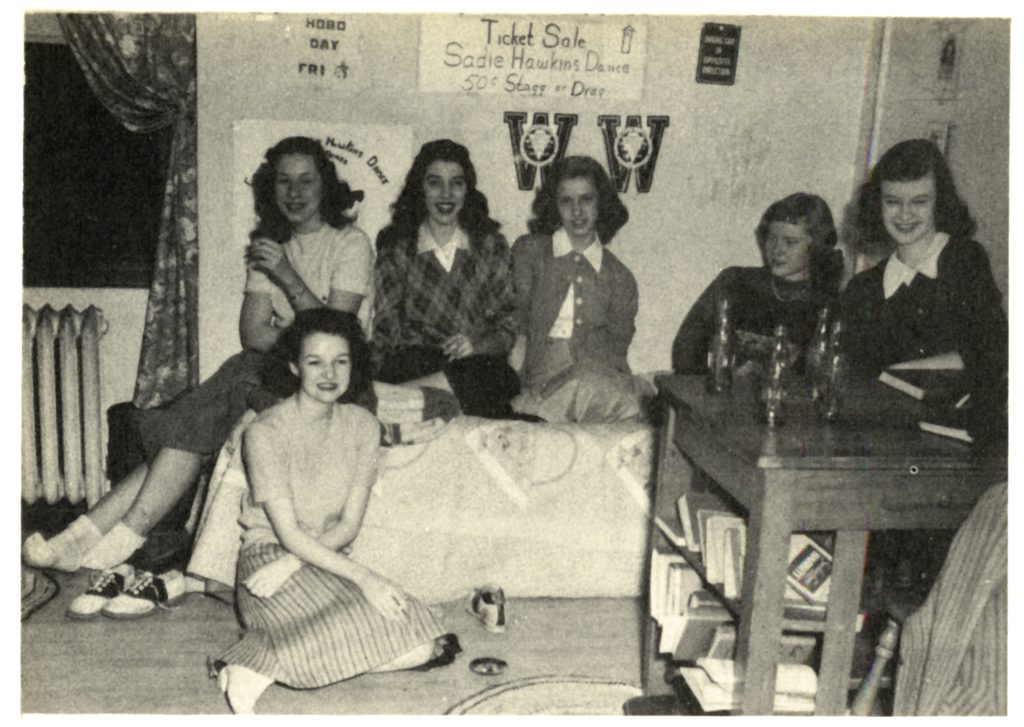
John Arnett, ba ’76, arrived at Washburn in 1974 as a transfer student from Butler County Community College. Unsure of what to expect from university life, he discovered a close-knit group of peers in what had become the campus’s only men’s dormitory.
“Washburn was so commuter-oriented then,” Arnett said. “Walking to the cafeteria in the evening, it felt like a ghost town. There were very few people living on campus.”
Arnett recalls 1970s dorm life vividly: radiator heat, a shared telephone on each floor and community bathrooms at the end of the hall. He lived in what he remembers as the largest room in the building – directly above the front door on the third floor, distinguished by its three-sash window.
Despite the sparse on-campus population at the time, the sense of community was strong. Arnett fondly remembers collaborating with the women of Carruth Hall on a homecoming float and creating T-shirts proclaiming themselves the “Benton Hall Streakers” – a playful nod to the cultural phenomenon of the era.
For his senior year, Arnett and three roommates convinced the resident assistant to let them occupy a unique suite on the main floor with its own bathroom – a luxury that kept them in the dormitory even though seniors typically moved off campus.
Now retired from a 35-year career in emergency medical services, Arnett reflected on how Benton Hall was part of his foundation.
“Benton Hall was where I met people, formed connections and really started to understand what Washburn could offer,” Arnett said. “I’m excited to see how the university continues to grow and create spaces for students to thrive.”
A Place of Growth
Washburn closed Benton Hall for student housing in 1989, repurposing the space for academics when the School of Applied Studies moved in by 1993. Few embody this transformation more than Associate Professor Tonya Ricklefs, aas ’98, bas ’00, msw ’11. Her connection to Benton Hall began in the early 90s as a student assistant, helping prepare the master’s in social work degree she would later complete.
“My main job was copying all the paperwork for the master’s program application,” Ricklefs said. “I had no idea I’d eventually be in that program myself.”
Life took her away from Washburn before finishing her undergraduate degrees. When she returned as a non-traditional student, Ricklefs often brought her young daughter to class, where faculty welcomed them both.
“They were always okay with me bringing my daughter,” Ricklefs said. “It was like a backdrop to learning how I wanted to teach. I wanted to be one of those professors who said, ‘bring your kids.’”
The building became even more significant after a personal tragedy. When her father died suddenly in a car accident during winter break, it was in Benton Hall where Diane McMillen, now professor emeritus, convinced her to return.
“She made a deal with me: just sit in class for one day,” Ricklefs said. “My family dropped me off in front of Benton Hall, and that’s when I remembered what I was missing.”
After earning her doctorate at Kansas State, Ricklefs returned to Washburn as faculty, teaching social work in the same classrooms where she had once been a student. Her office became a place where another daughter, who was a Washburn student at the time, would take naps between classes.
“I spent more years in Benton Hall than in some of the homes I lived in as an adult,” Ricklefs said. “It was definitely a backdrop to my life – like a home, really.”
A Legacy That Lives On
Applied Studies now occupies the former Mabee Library building and other departments have moved to other locations. Benton Hall’s physical presence will be gone, but its legacy endures. The connections built within its walls – the mentorships, the late-night study sessions and the quiet moments of personal growth – continue to shape lives and careers. As Washburn continues to evolve and grow, Benton Hall’s impact lives on in the lives it touched and the futures it helped create.
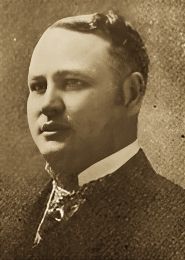 Otis Benton was a prominent banker and landowner in Oberlin, Kansas. Born in Pottawatomie County, Kansas, in 1866, he graduated from the high school academy of Washburn College in 1884 and then Elliott’s Business College in Iowa. He started his career as a bank clerk and became president of Oberlin National Bank in 1904. He was also head of the Benton & Hopkins Investment Company. Benton met Maude Durkee while students at Washburn and they married in 1887. All three of their children who survived infancy graduated from Washburn College. Otis and Maude remained supporters of Washburn with Otis serving as a trustee for several years and the two donating generously. After Washburn announced an $800,000 campaign to support new buildings and a permanent endowment, the Bentons gave $50,000 in 1921.
Otis, Maude and their three children were loyal and “influential boosters of the college in the northwestern part of the state, which is providing Washburn with a steady and growing stream of students,” said a Topeka Daily Capital article when their gift was announced. Otis responded in the article by saying, “Knowing President (Parley) Womer’s great ambition to place the institution upon a substantial foundation, and being fully convinced of his clear vision, his high attainments and his practical appreciation of business methods in handling the problems of the college, I am glad that I can do a little to promote the great campaign that is now begun.”
Otis died unexpectedly on June 9, 1921, the day after announcing the $50,000 gift. With plans underway to build a new dormitory, Washburn named the building Benton Hall when it opened in 1923. His legacy lived on not just through the building, but through his family and the numerous students he recruited to Washburn.
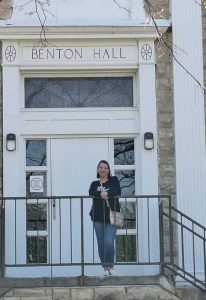 Writing the poem was my way of honoring all that Benton Hall stood for – not just as a physical structure, but as a place of personal rebirth and resilience. It was a goodbye, a thank-you and a tribute to a building that witnessed some of my most important steps toward becoming who I am today.
